Young Minds, Big Solutions
Empowering Young Problem Solvers to Tackle Global Challenges
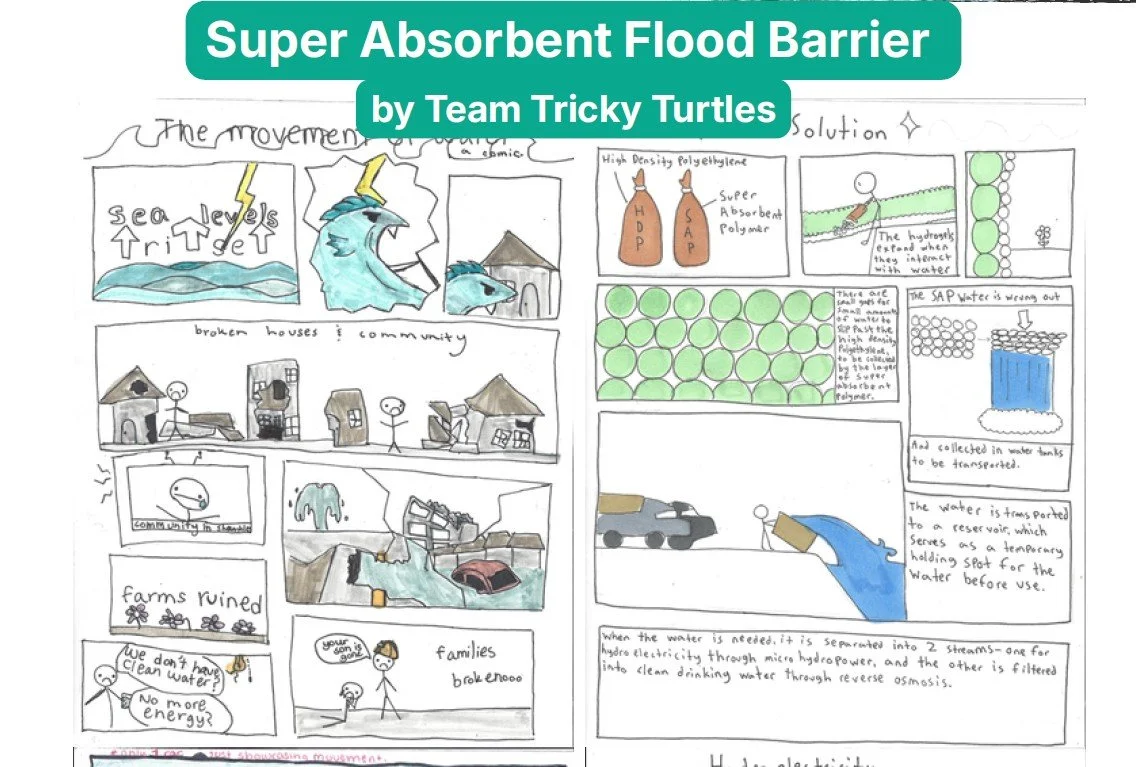
Future Problem Solvers Take on Rising Sea Levels
What happens when young people are challenged to solve one of the world’s most pressing environmental issues?
Through the Future Problem Solving Program International’s 2025 World Solutions Challenge, students across the United States and around the world were asked to explore the complex issue of rising sea levels—and develop creative, practical solutions for the future.
With support from the Glenn W. Bailey Foundation, the World Solutions Challenge expanded access to this innovative STEM-based learning experience, particularly for students who might not otherwise have the opportunity to participate.
Turning a Global Challenge into an Opportunity to Learn
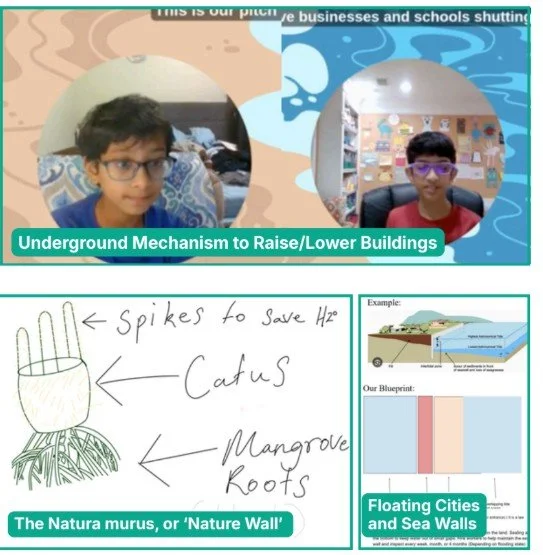
The 2025 challenge invited students to examine how rising sea levels may affect coastlines, industries, communities, and individuals. Using Future Problem Solving’s proven six-step problem-solving process, teams researched the issue, identified challenges, developed possible solutions, and created action plans.
Participation grew significantly in 2025, reaching 201 students on 59 teams, up from 172 students and 52 teams the previous year. Students represented eight countries and 13 U.S. states, including teams from five states participating for the first time: Colorado, Georgia, Michigan, Missouri, and Rhode Island.
The program also successfully reached students in underserved communities. Teams from Kentucky, Louisiana, New Jersey, and North Carolina represented Title I schools, while 94% of participating coaches were new to Future Problem Solving.
More than half of participating students—56%—competed in the Junior Division, demonstrating that even younger students can engage thoughtfully with complex global issues when given the right tools and support.
Expanding Access Through Engaging STEM Resources
Foundation support helped Future Problem Solving enhance its educational resources and expand outreach to students with financial need.
Students and coaches received a comprehensive research unit introducing key themes, concepts, vocabulary, articles, and suggested readings related to rising sea levels. A series of seven short instructional videos guided students through the challenge and Future Problem Solving process, with views of the instructional videos increasing 52% over the previous year.
Additional activities, learning resources, coach materials, judging tools, and instructional support helped make the program accessible to both new and returning participants.
The flexible format also allowed students to participate asynchronously, meeting when and where it worked best for their teams—including virtually—helping remove traditional barriers to participation.
Building Skills That Extend Beyond the Classroom
While rising sea levels provided the subject matter, the challenge was ultimately about something much larger: teaching young people how to think.
Student submissions demonstrated not only an understanding of the environmental issue but also creativity, collaboration, research skills, and the ability to approach complicated problems systematically.
As one student shared:
“This was a good learning experience and it was really fun to compete in this competition. My favorite part was that it was a realistic multi step process to reach the best solution possible and that it applies to a real world problem.”
Parents also saw the impact.
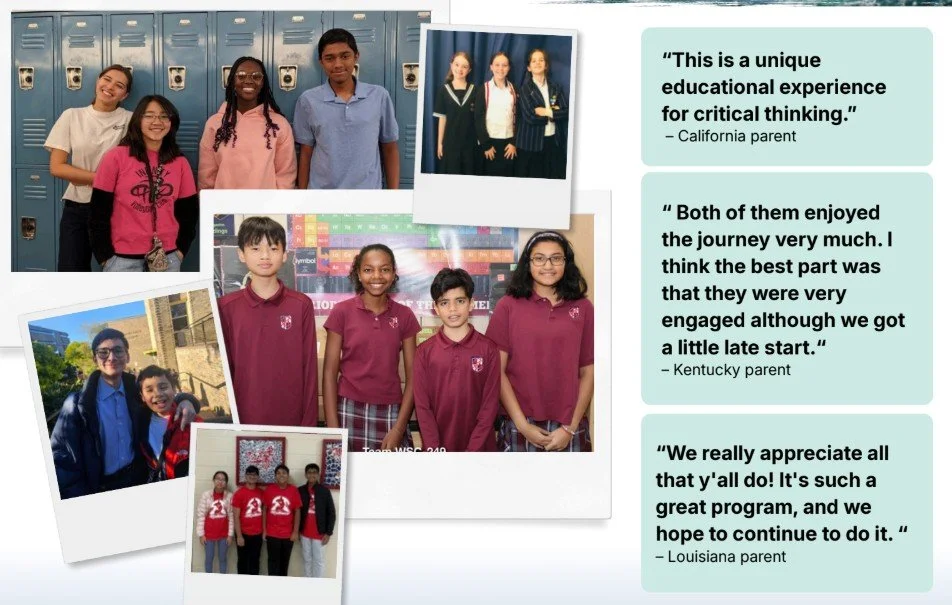
“This is a unique educational experience for critical thinking.”
— California parent
Another parent shared:
“We really appreciate all that y'all do! It's such a great program, and we hope to continue to do it.”
— Louisiana parent
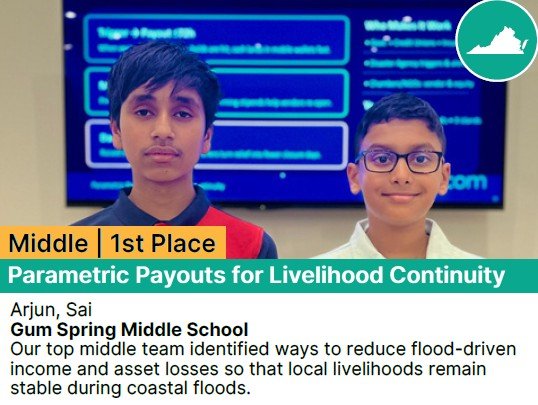
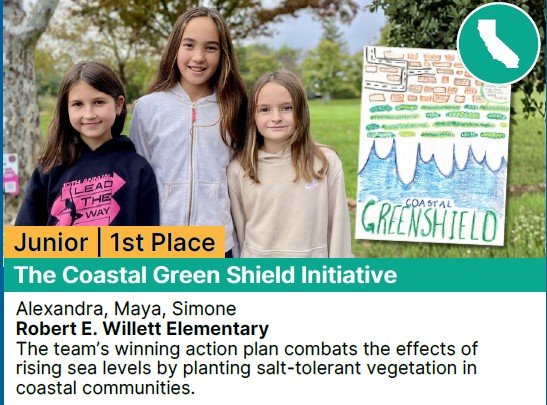
The experience didn't necessarily end when the challenge did. Both winning teams went on to attend Future Problem Solving's World Finals in June, and several participating coaches continued engaging with Future Problem Solving programs and educational resources following the competition.
Preparing Young People for the Problems of Tomorrow
For more than 50 years, Future Problem Solving has helped young people develop the critical and creative thinking skills needed to address complex problems and pursue opportunities in STEM and other globally competitive fields.
The World Solutions Challenge is helping extend that mission to even more students by providing a flexible and accessible introduction to Future Problem Solving.
Lessons from the 2025 challenge are already shaping the program's future. For 2026, the organization expanded the competition window from three weeks to four, added more structured support for younger participants, and refined its evaluation process.
At the Glenn W. Bailey Foundation, we are proud to support programs that give young people the opportunity to explore, question, create, and develop the skills they will need to shape their own futures.
The problems facing tomorrow's world will require thoughtful and imaginative solutions. Through opportunities like the World Solutions Challenge, students aren't simply learning about those problems—they're learning that they can be part of solving them.